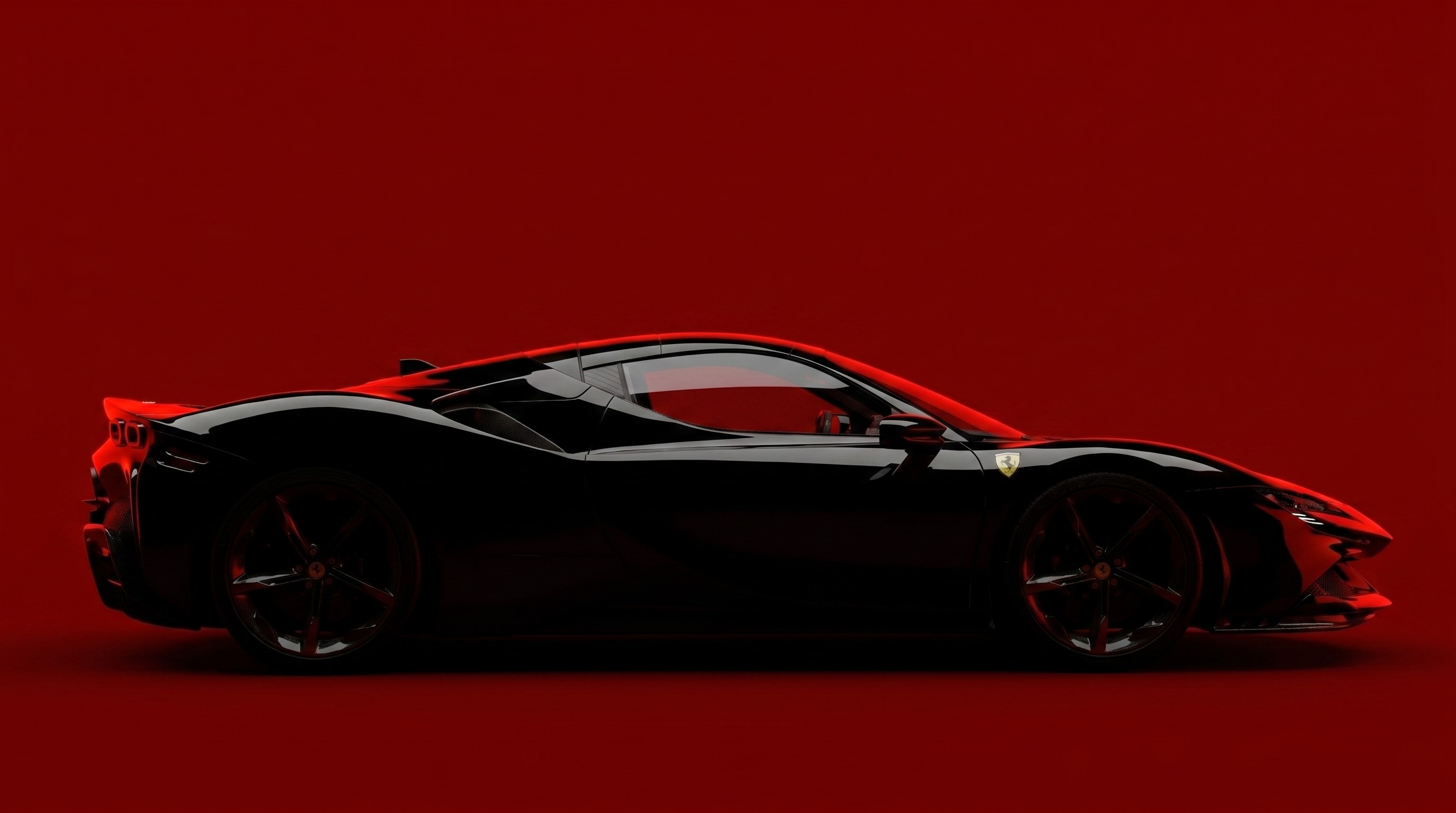
The brief was as clear as it was demanding: bring film-quality visual production into an interactive car configurator. Not a rendered video, not a static 3D viewer: a real-time experience capable of making a Ferrari SF90 look like it belongs on a cinema screen, while remaining fully responsive to the customer's choices.
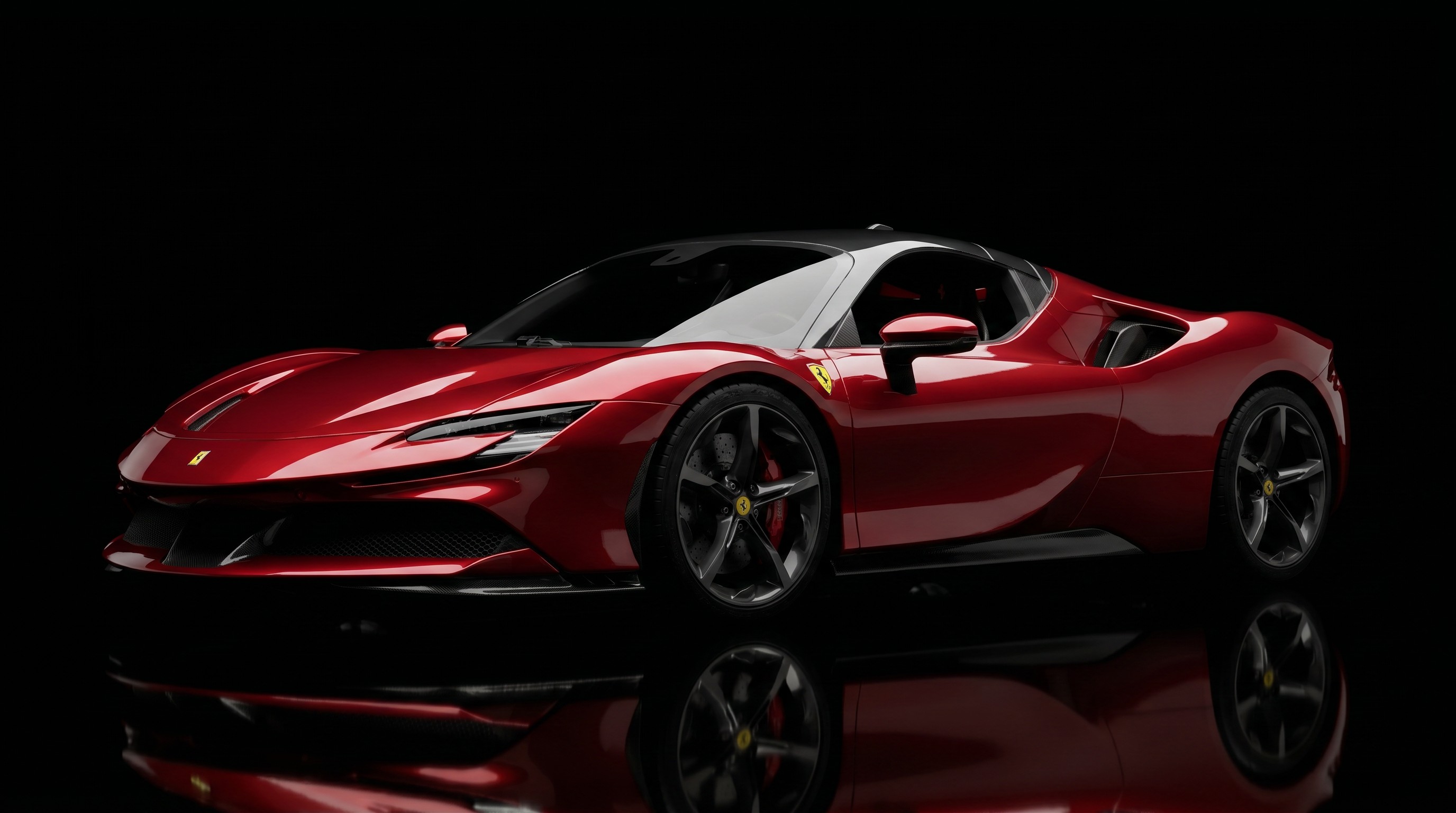
The Context
The project was developed in collaboration with a design studio, with the end experience intended to run in Ferrari dealerships. A remote server would launch Unreal Engine, delivering the configurator directly to the showroom floor. This shaped every technical decision: performance, stability, and visual consistency had to hold up outside of a controlled production environment.
My role was Technical Director, working in close collaboration with the Art Director to define both the shape of the experience and how it would be communicated and executed across the team: vehicle artist, environment artists, UX designers.
The Experience
The core concept, developed through a full storyboard and pitch, was a journey. Rather than a static backdrop, the SF90 travels through a series of environments that respond directly to the customer's configuration choices: mountain roads for winter tyres and a closed roof, open terrain for performance setups.
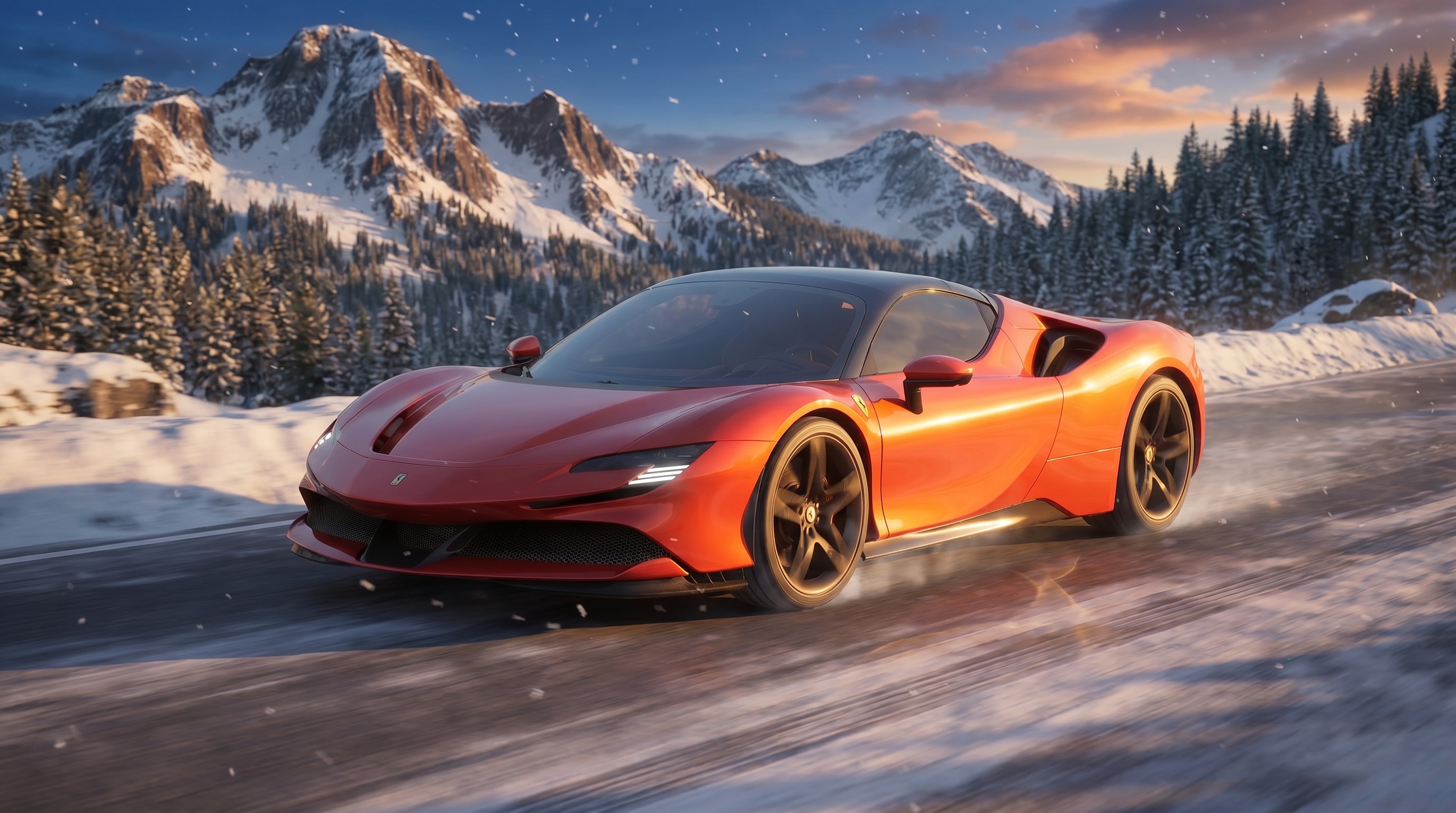
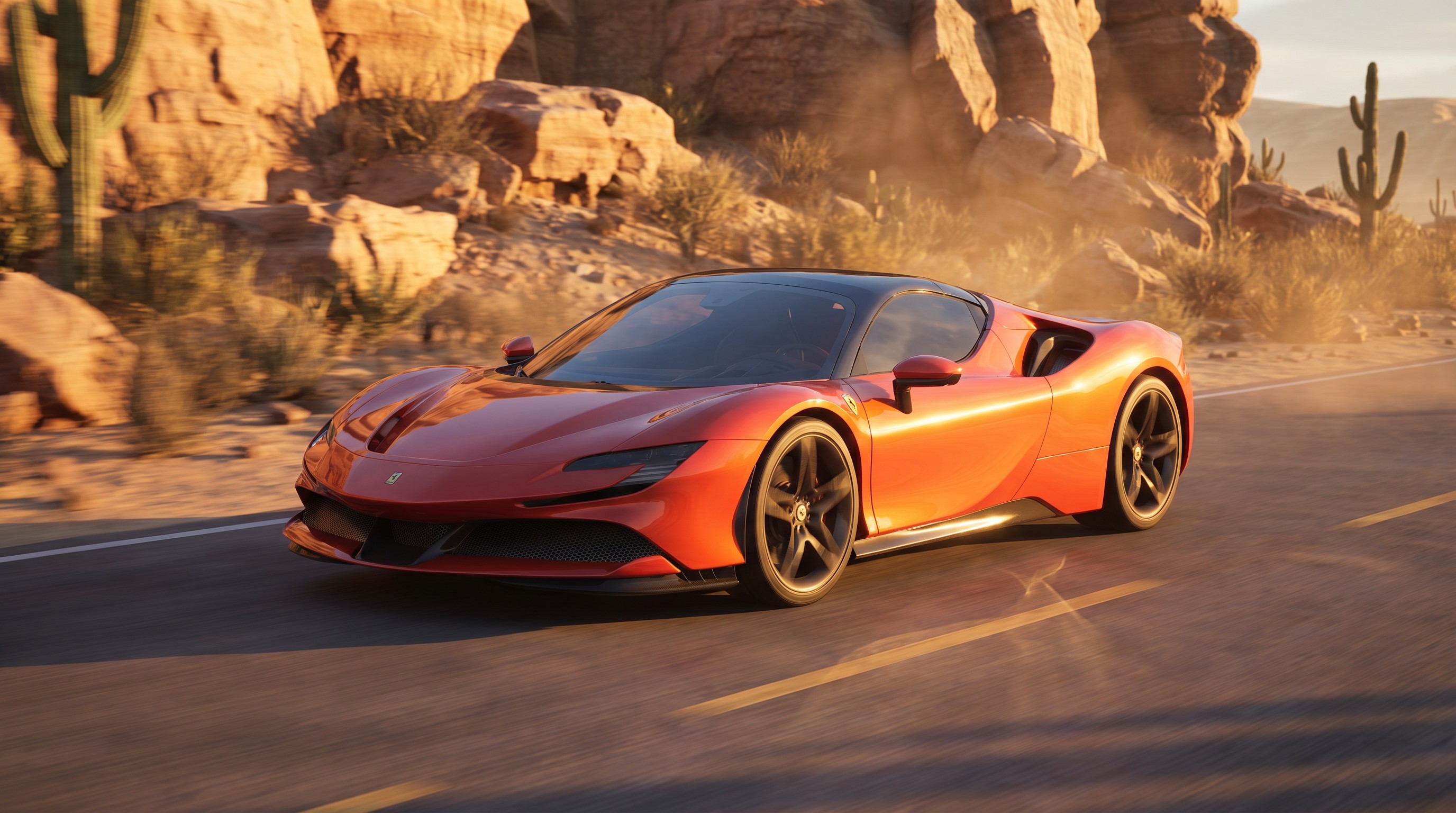
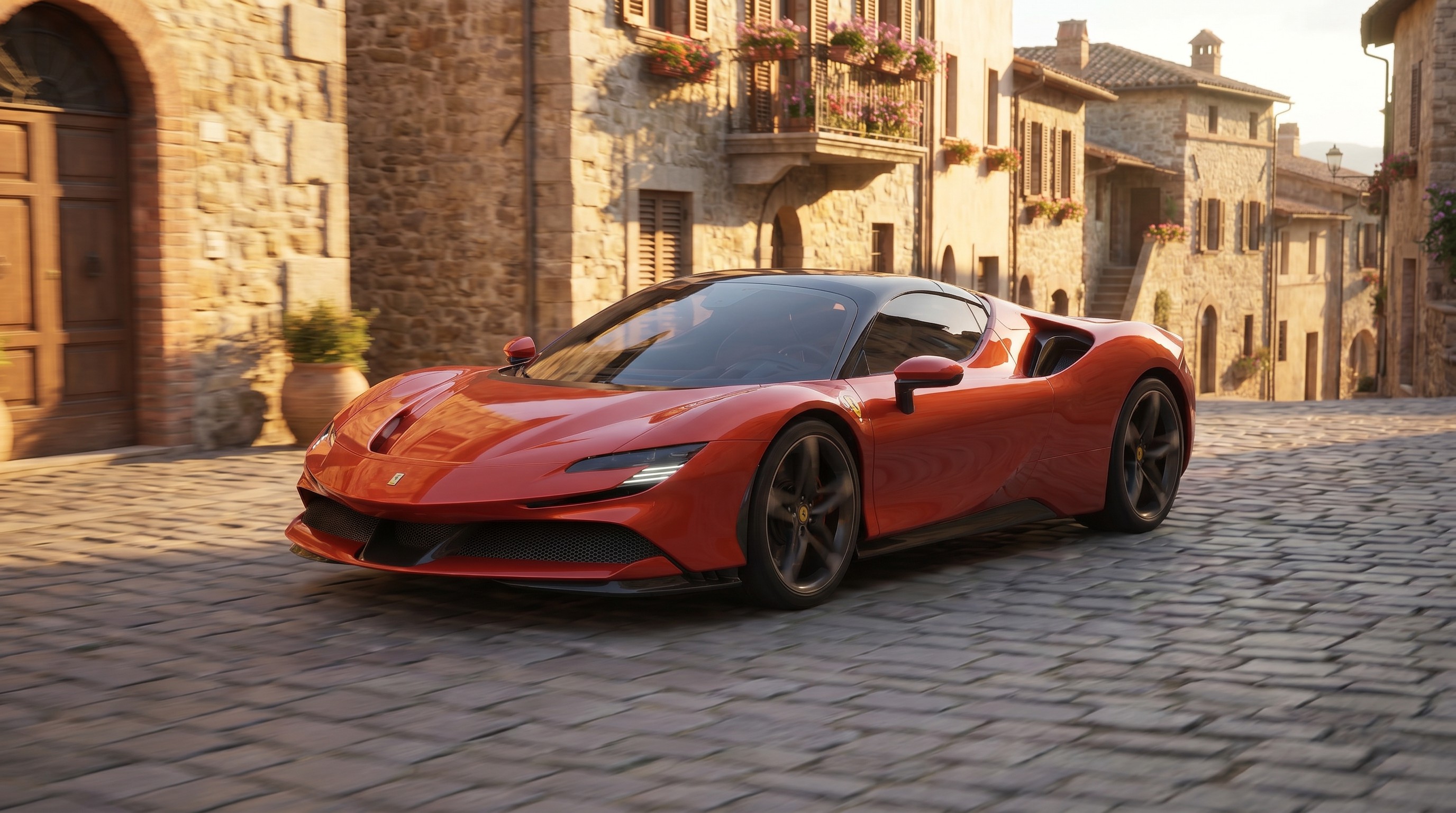
The environment was not decoration: it was part of the narrative logic of the product. The camera system was central to this. Every interaction triggered a deliberate camera response: selecting a wheel variant would move the camera onto the wheel, slow time down, and hold the view long enough for the detail to register. The configurator was not just showing options: it was directing attention, the psychology of where someone looks, and for how long, built directly into the camera.
Technical Execution
For the prototype, I personally handled the vehicle rig and animation, and built a first looping environment to run initial tests and validate the visual direction. I also developed the interaction logic in Blueprint, Unreal Engine's node-based scripting system, laying the foundation for how user inputs would drive camera behaviour, environment transitions, and configuration states.
Coordination was as critical as execution. Working closely with the Art Director, we maintained a shared vision across all stages and kept the production team aligned, translating creative decisions into actionable briefs for each specialist without losing quality or direction in the process.
The technology follows from the vision, not the other way around.
What I Learned
A real-time configurator at this level of ambition is as much a directing exercise as a technical one. The decisions that define the experience, where the camera goes, how long it holds, what the environment communicates, are creative decisions that have to be made early and held consistently.
Managing that creative continuity across a multidisciplinary team is where the real complexity lives. Technical precision matters, but it only serves the project when the direction behind it is clear and shared.